

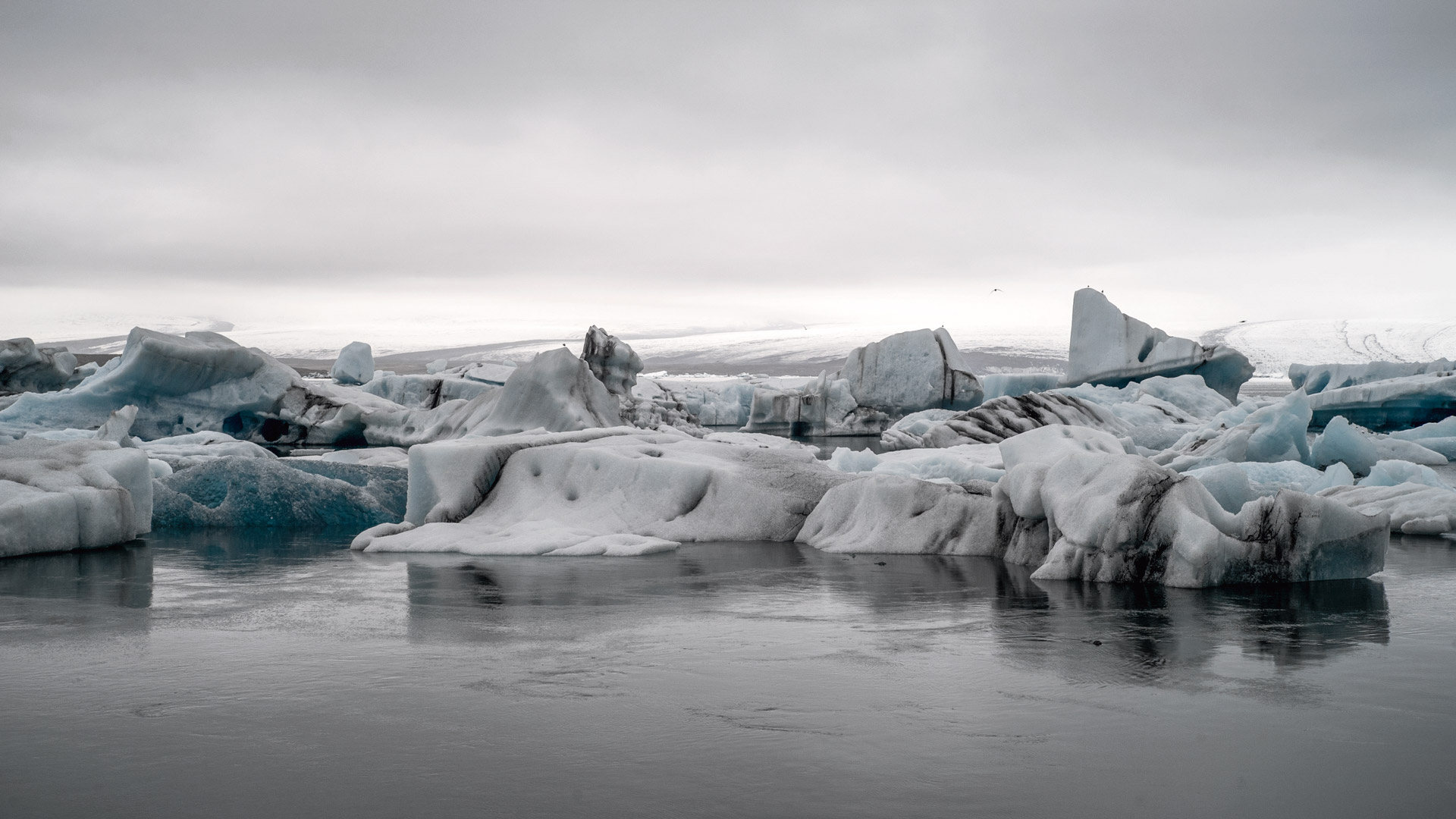
Photos: The Conquest of Home, Adriana Lestido, 2022
The modification of the Glaciers Law is not merely a technical change on paper: it is a direct threat to the health of thirty-nine rivers, which basins sustain life far beyond the peaks. Nearly half of those streams originate in the glacial systems of the arid Andes, where ice infiltrates the land in an invisible journey across the boundaries of argentinean provinces, supplying towns and cities even hundreds of kilometers downstream.
Sixteen years ago, the Glaciers Law emerged from a pioneering consensus between the scientific community and civil society. At that time, the climate crisis was coming, but not yet a reality. The Law establishes minimum protections for ice bodies throughout the country, thereby safeguarding the water resource for seven million Argentines. It prohibits, for example, mining and oil and gas extraction where frozen sources of freshwater exist. Yet under the alleged lobbying of the “Lithium Roundtable” and the “Copper Roundtable,” Milei sent to Congress a reform that seeks to hollow out that federal protection: it would allow such projects, through an administrative procedure made by each provincial government, to be carried out on glaciers and on the territories that make them possible.
In total, one out of every five people in Argentina depends on the water that flows down from the Andes mountain range. Moreover, 20% of infiltration into river basins depends not only on the main glacial bodies but also on the periglacial environment. This frozen area surrounding major ice masses—together with rock glaciers and perennial snowfields—can supply up to half of the water available to Andean populations during periods of water stress. This is not only the water we drink, but it is also the water that enables all human activity, including the cultivation of food later distributed throughout the country. To understand that we are part of the basins we inhabit is to grasp the extent to which water is inscribed in our material existence. What we touch, what we eat, what we drink—all depend on water availability. And at least so far, there is no human infrastructure capable of replacing the function of ice as a source of water.
The accelerated loss of the Andean cryosphere due to climatic imbalance reduces both the availability and stability of water across much of Argentina and the region, directly affecting basins that rely on glaciers, snow, and periglacial environments, and worsening the structural water stress faced by most of the country.
What kind of institutional conflict will mining and oil companies be subject to if they rely on an unconstitutional reform for their operations? How much social license will there be for mining companies to hoard water when wages are no longer sufficient to buy drinking water by the bottle? The attempt by the mining sector to empty the Glaciers Law of its substance is longstanding, but it now appears alongside a broader wave of rollbacks in water governance in Argentina, including privatizations and multiple forms of structural dismantling. Over the past two years, national water policy has actively supported the erosion of state institutions in order to place decision-making power over the web of life into the hands of a few private—mostly foreign—actors.
***
Edilsa Ibáñez arrives at the edge of the Colombian páramos where she grew up. At the foot of the highland meadow, before setting out, she asks for permission. She knows that the mountains open themselves only to those who understand that this space is not merely a resource, but a companion in life, a form of sustenance. For those who inhabit such landscapes daily, it is common to find a piece of their own heart embedded in the territory. Edilsa is a woman of the páramo. The area where her home is used to be called inland, but is now a national park—territory granted to the protection of the U’wa people. She is a mountain guide and lives by walking, ascending and descending the sierra as a way of life. Her identity is inscribed in the glaciers of the Sierra Nevada del Cocuy, and for that reason, it is also at risk. Along those frozen surfaces, people were raised, fell in love, learned how to live in sync with the rhythms of the mountain. Today they are trying to protect those forms of life against the threat that the climate crisis poses to these territories.
The ices are melting. What was once the largest continuous snow mass in South America north of the Equator has now been fragmented into only fifteen small glaciers. For a people raised among frozen landscapes, the death of ice also implies their own death. Who they are depends on their environment in the deepest possible way. The U’wa call glaciers “zizumas,” places where great sages come to rest. They even say that the glacier-zizuma was part of the creation of the world. If the zizumas melt, where will the ancestors go?
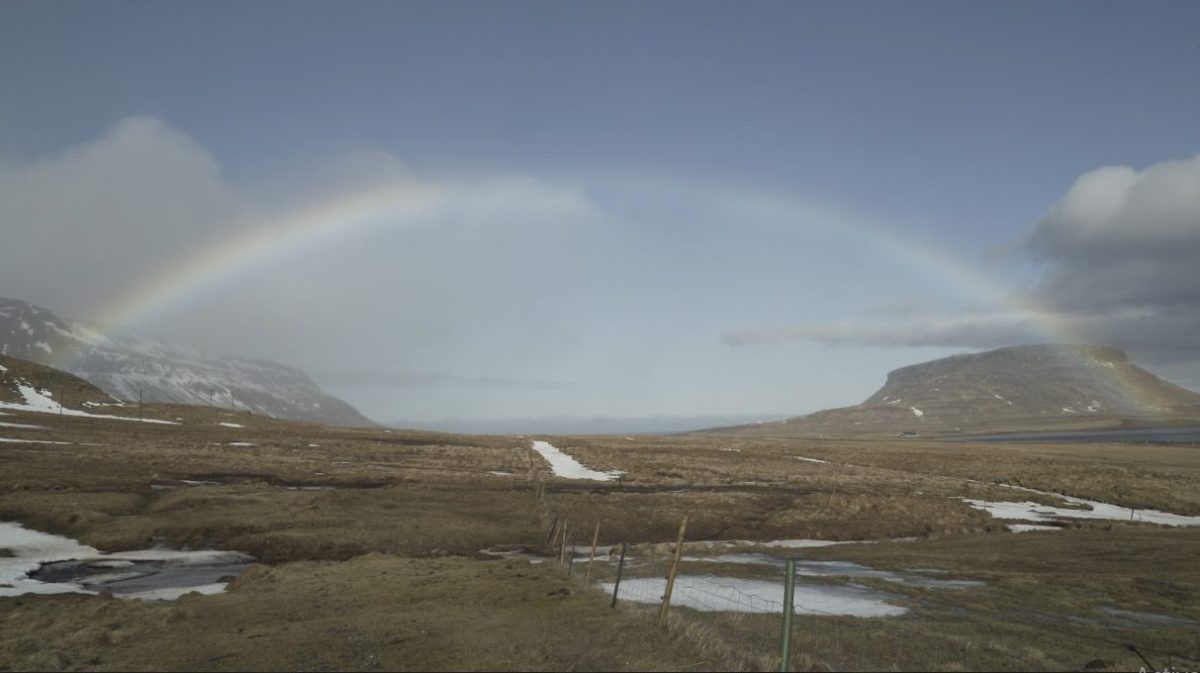
Not far from the twenty snow-covered peaks that the U’wa understand as part of their identity, the Andes begin. Along more than seven thousand kilometers, hundreds of mountain peaks host an enormous diversity of high-mountain life, stretching down the cordillera to Tierra del Fuego and sinking into the frozen waters of Cape Horn. Cultural connections to summits, waters, and river basins vary from community to community. The co-creation of identity is clear in Edilsa and in the Sierra itself. But how do Argentine cultures connect to those bodies of ice, to their waters? What portion of who we are is at stake if the Cordillera is “split up like a cake”?
On the other side of our map, the north east region of Argentina is home to identities that are inseparable from its wetlands, low waters, and floods that set the rythm of life through the vast Paraná–Plata basin. But how many songs exist for the Argentine Sea? Or for the Antarctic snow? Conflicts such as those surrounding the Paraná River or offshore exploration along the Buenos Aires coast have pushed sovereignty claims over the Argentine Sea into the center of social and political debate—especially in the face of climate denialism by the ruling government. The deep-sea expedition carried out by CONICET is one of the most compelling examples of how territory can be inscribed into culture. Creatures like the “fat-bottomed starfish” have entered the collective imagination and now appear in children’s drawings, memes, and T-shirts. The cultural bond between the ocean and Argentina has shifted. We now know that those waters teem with life beyond human—and perhaps a piece of the Argentine people’s heart now resides there as well.
***
Nowhere in the natural world does water exist as odorless, colorless, and tasteless. Its palettes, aromas, and flavors are as diverse as the ecosystems that produce it. As temperatures approach zero, its forms change: it can freeze, become solid, or crystallize partially. This dimension is called the “cryosphere”—an element that is not simply ice or water, but a gradient, a spectrum of freezing fundamental to planetary climate balance. It includes glaciers, polar ice, snow, sea ice, and permafrost—portions of soil, rock, or sediment that remain permanently frozen. Like wetlands, glaciers and Andean snow act as seasonal regulators: they store water in winter and release it in spring and summer.
Mountain glacier retreat is global, and its implications for freshwater availability are irreversible—especially in regions that do not depend on local rainfall. The latest global State of the Cryosphere report confirms that damage is occurring far faster than expected. This directly impacts global water systems by disrupting seasonal regulation: access to water will steadily decline. After Antarctica, Patagonia is the region with the largest ice fields on the planet—and also the one experiencing the most severe loss.
Argentina is running out of water. Water stress is structural: in nearly two-thirds of the national territory, demand consistently exceeds availability. While the Paraná–Plata basin does not face chronic scarcity, recent low-water events have already generated profound instability. The province of Mendoza, by contrast, is once again desperate: in 2026 the province will have only 61% of its historical average water availability, according to the local General Department of Irrigation, mainly due to the lack of winter snowfall. For twenty-five years Mendoza has endured hydrological drought, yet the alliance between Governor Cornejo and Milei’s party, La Libertad Avanza, insists on advancing mining projects that consume vast quantities of water—while criminalizing activists and environmental defenders protecting this common good. The San Jorge Project, a copper-extractivist venture dating back to 2007, was blocked by social protest until last December. It was approved then, and since that moment the people of Mendoza have mobilized in a new struggle for water. Once again, they converge on the city of Uspallata, where the mine seeks to install, to say no to the mine: the water of the Cordillera is not negotiable.
***
The geological scale of the Andes involves deep time. Even if mining representatives claim that projects affecting the periglacial environment are “long-term,” what are forty years to a glacier? Latent within the frozen folds of the mountain lie entire geological eras. Snow may last days; permafrost and sea ice may last years or decades; but glacial ice shelters soils, sands, and organic matter thousands of years old. Within its crystals hibernate bacteria, algae, fungi, and viruses—some potentially dangerous to a global web of life that has forgotten how to defend itself against these microorganisms.
Colombian researcher Elían Castellanos Ruiz studies the relationship between glaciers and societies, focusing on the U’wa people, peasant communities, and mountaineers, walking the territories of the Sierra Nevada del Cocuy. Her work shows that ice is often globally seen only as an indicator of climate crisis, when in fact it is part of the cultural, ontological, and spiritual heritage of many territories. Through situated cultural practices, such as those of the U’wa, it becomes possible to attune one’s ear and listen to what descends slowly from another era. As glaciers turn into water, they release and narrate their own stories. Ice also holds the memory of non-human lives that once walked these worlds.
Climate-driven deglaciation condemns the main ice bodies to disappear by mid-century. The death of a glacier also marks a civilizational failure in our relationship with deep time. Organic ruins remind us that the past was real—that there was a world before us.
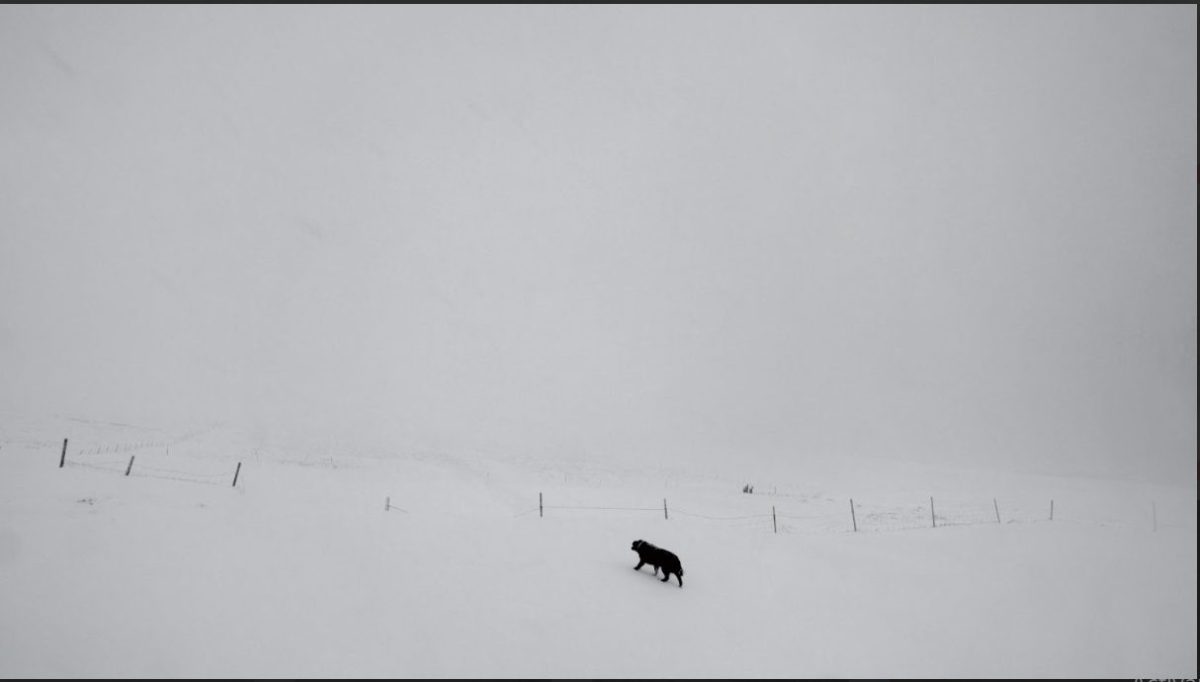
That is why when people say “water is life,” they refer not only to biological survival. Water does not merely give life—it propels it. It imprints rhythm and movement on everyday existence. Without the highlands of the Cordillera, there would be absences downstream. Life and culture would pulse at a different tempo. Identity-territory depends on water, and when a glacier dies, we also lose the possibility of identities enduring.
A glacier is never the same—it exists through constant processes of existence and re-existence. As fragments of the past melt into water, the present solidifies elsewhere. A colossal ship of Theseus flowing toward cities that orient themselves by snowy peaks, sustaining the pride of belonging to the land where one was raised. Territory shapes not only bodies, but identities. The Andes compose who we are.
***
In 2019, Katrín Jakobsdóttir faced an unbearable task. As Prime Minister of Iceland, she presided over a ceremony she wished she did not have to attend: the funeral of Okjökull. At 700 years old, it was the first glacier officially declared dead due to climate change. Those present knew it would not be the last farewell, yet tears froze in the extreme cold. The grief was not only for the ice, but for the impotence it revealed. On the volcano that once held Okjökull, a plaque was placed in its honor, titled A Letter to the Future: “This monument is to acknowledge that we know what is happening and what needs to be done. Only you will know whether we did it.”
Will we be the last people to know glaciers? To think that a glacier’s sole purpose is to become water is to confine it to an image of its own end. In an economistic worldview, a forest has no value until it is cut down. For vast sectors of power, a glacier has no worth until it turns into water—until it ceases to exist. To reduce glaciers to “strategic water reserves” is to value them only in their disappearance. They matter today because tomorrow they will be gone.
In the future, amid global climate instability, younger generations will remember the afternoon when their elders told stories of ice that once seemed eternal. In glaciology, the death of a glacier is the moment when it shrinks so much that it stops moving—becoming merely a snowfield. As environments change, so do dimensions of culture, which is built and rebuilt in constant synergy with its surroundings. And like a glacier, if culture stops moving, it too can die. Castellanos Ruiz recalls a teacher from the Guicán region who described the loss of memory this way: “Not only are glaciers melting—we are melting too.”
***
The attack on the Glaciers Law is not only an assault on ice bodies. It is a direct offensive against the possible bonds between water, culture, and time. From ancestral times to today, there is only a river’s distance. Accumulated time is now part of us—a material memory holding pasts that insist on speaking, whispering slowness, suggesting immanence. To confront their disappearance is to anticipate the grief of what will be lost. Even the earth itself—the stone shaping the Andes mountain range—moves again. So does our relationship to disappearance, to mourning, to continuity.
On cold nights in the Colombian páramos, what illuminated the path for young Edilsa and her community were native plants: frailejones. Children marveled when they used the dried layers of the plant’s stem as torches, lighting the darkness of the páramo without electricity. The frailejón was not merely a plant—it was a companion that gave light. For the U’wa, humanity and nature are not separate: snow and plants are also people—non-human people.
The connection to territory is so deep that when the U’wa saw their land fundamentally threatened by oil extraction, they understood it as ethnocide. In a public manifesto—now difficult to find—they declared: “We prefer a dignified death, worthy of the pride of our ancestors who challenged the dominion of conquerors and missionaries.” Seven thousand people threatened collective suicide if their territory was violated. Nearly twenty years later, through unwavering tenacity, they succeeded in having the Inter-American Court of Human Rights recognize their right to protect their cultural, spiritual, and ancestral life as a condition for dignity. The Court also affirmed their right to participate in the management of El Cocuy National Natural Park.
To witness a glacier and believe its present holds no value in itself is something I find incomprehensible. Its death may be inevitable—but so is ours. Nothing that lives is immortal. Knowing our end strips away the illusion of permanence. But how do we imagine ethics of care that include frozen bodies beyond conservation? Castellanos Ruiz proposes glacial care: “A care that involves not only humans, but peoples—thinking ourselves as Nature through an expanded care. It emerges from local networks that sustain daily life, including the gathering of peoples around glaciers, around life.”
What do Argentine glaciers have to tell us? What knowledge do they hold that could permeate culture? “It begins by grounding ourselves in our natural bodies and allowing ourselves to be Nature—in reciprocity, tension, conflict, and harmony—understanding the expansion that we are and the networks that bind us,” Castellanos Ruiz continues.
How can we imagine forms of social organization that inhabit nature’s memories? By bringing other pasts into the present. Or by inscribing care for what lies beyond the known—from the depths of the sea to the heart of ice—into the collective unconscious. That which, like us, struggles to re-exist on the land of the past we traverse.